Cost Guide
Cost of POP ceiling in Nigeria 2026
POP ceiling is the most popular ceiling finish in Nigerian homes, but prices swing widely with design complexity and board quality. This guide explains what it costs per m², what drives the price, and what to check before you pay.
Average Cost of POP Ceiling, Labour + Materials
Estimated cost of POP Ceiling, including labour and materials.
Average Cost of POP Ceiling, Labour Only
Estimated labour cost of POP Ceiling, excluding materials.
Nigeria-wide figures use the local General / Nigeria record, or typical values from available state records. Final quotations depend on scope, specification and site condition.
Open full calculator1. Cost of POP ceiling in Nigeria 2026
A POP ceiling is usually the last big decision a Nigerian homeowner makes before moving in, and it is often the one that blows the finishing budget. The reason is simple: POP is not priced like paint or tiles. A plain flat ceiling and a ceiling with recessed panels, hidden lighting troughs, curved drops, and stepped covings use the same board and the same plaster, but the labour can be two or three times higher. Two neighbours with the same living room can pay very different amounts.
This guide explains what POP ceiling costs in Nigeria, how it is measured, what actually moves the price, and what a proper quote should contain so you are not surprised halfway through the job.
2. How POP ceiling is measured
POP ceiling is measured by m² of ceiling area — the length times the width of the room, measured at ceiling level. A living room of 5.0 m × 4.0 m is 20 m². Design features are measured separately: covings and drops by linear metre, recessed panels and lighting troughs by linear metre or as a lump sum, and any special shapes as a lump sum. The total cost is the ceiling area times the per-m² rate, plus the design features. Always ask the contractor to state the plain ceiling rate and the feature rates separately, because a single lump sum hides which part of the design is driving the cost.
3. Quick answer - POP ceiling prices in Nigeria 2026
| Pricing basis | Low | Average | High |
|---|---|---|---|
| Labour and materials, per m² (plain ceiling) | ₦10,000 | ₦12,000 | ₦15,000 |
| Labour and materials, per m² (with design features) | ₦12,000 | ₦15,000 | ₦18,000 |
| Labour only, per m² | ₦2,000 | ₦3,000 | ₦4,000 |
Total = (ceiling area × per-m² rate) + (linear metres of coving and drops × per-metre rate) + lighting troughs and special features.
4. What low, average and high mean
Low is a plain flat POP ceiling with a simple perimeter coving, standard boards, and a straightforward rectangular room.
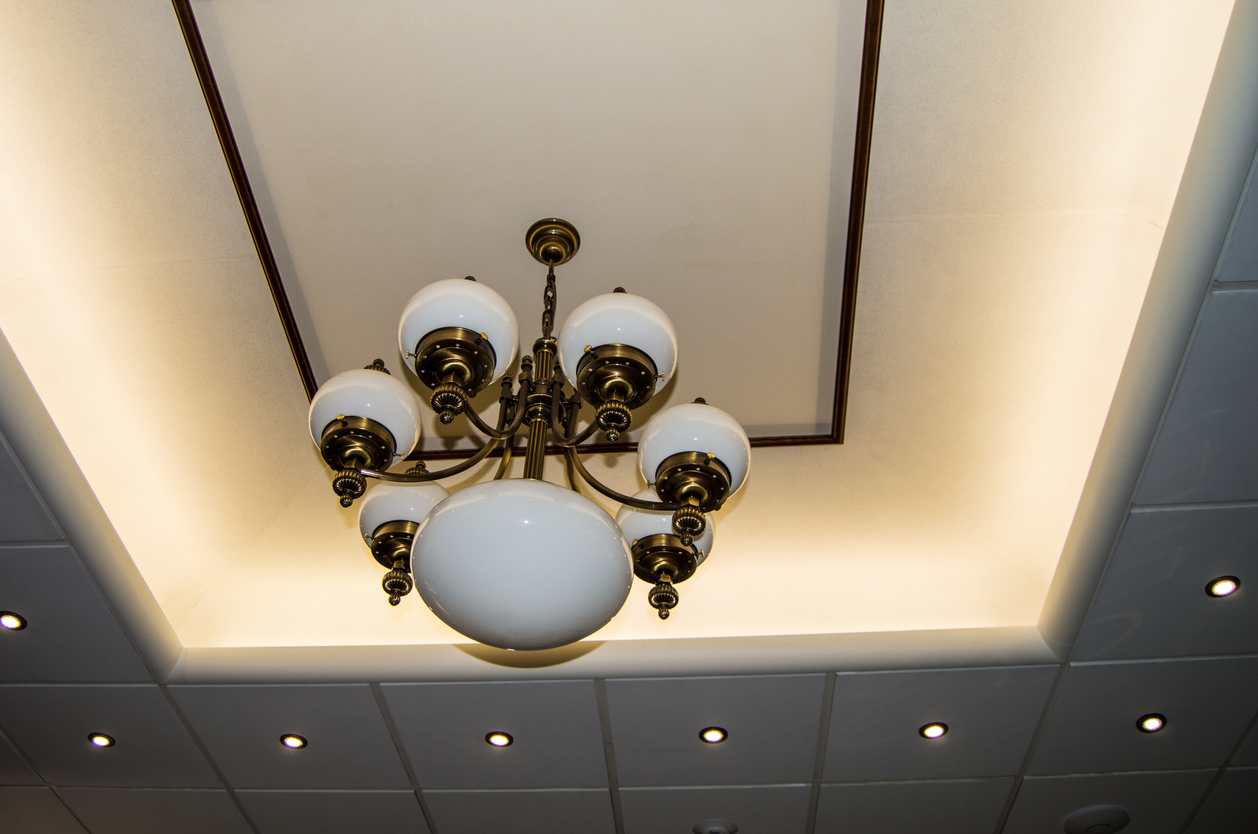
Average is a flat ceiling with a stepped perimeter, a recessed centre panel, and one or two lighting troughs — the most common Nigerian living-room design.
High is a heavily detailed ceiling with curved drops, multiple levels, concealed LED troughs throughout, and decorative features that need skilled handwork and more time.
5. Factors that change the price of POP ceiling
- Design complexity - the single biggest driver; a plain ceiling and a multi-level ceiling with troughs are not the same job, even in the same room.
- Ceiling area - larger rooms use more board, more plaster, and more labour, but the per-m² rate usually falls slightly on bigger jobs.
- Board quality and thickness - standard gypsum board versus moisture-resistant or fire-rated board changes both material cost and lifespan.
- Coving and drop length - priced per linear metre, so a room with many corners and features costs more than a plain rectangle.
- Lighting troughs - each trough needs framing, boarding, and careful finishing, and concealed LED strips add wiring and fittings.
- Room height and access - high ceilings need scaffolding or tall platforms, which adds labour and time.
- Existing ceiling removal - if an old ceiling must come down first, that is a separate cost that is often forgotten.
- Finish and painting - POP is usually painted after installation; confirm whether painting is included or separate.
6. Cost breakdown - what you are paying for
- Boards and framing (25–35%) - gypsum board, metal or timber framing, and fixings.
- Plaster and jointing (15–20%) - joint compound, skim coats, and sanding.
- Design features (15–25%) - covings, drops, troughs, and special shapes.
- Labour and scaffolding (20–30%) - installation, finishing, and access equipment.
- Supervision and snagging (5–8%) - checking joints, levels, and finish before handover.
7. What a POP ceiling quote should include
- Ceiling area and the per-m² rate for the plain ceiling
- Linear metres and rate for covings, drops, and troughs
- Board type and thickness
- Whether framing is metal or timber
- Whether painting is included
- Whether removal of an existing ceiling is included
- Scaffolding and access arrangements
- Snagging and handover
8. What can go wrong with POP ceiling
- Sagging boards - caused by insufficient framing or fixings, usually visible within months.
- Cracks at joints - poor jointing or movement in the structure; the joints must be taped and finished properly.
- Water stains from leaks - POP is not waterproof; a roof or plumbing leak shows quickly, and the source must be fixed before repairing the ceiling.
- Uneven finish - visible under raking light, usually from rushed sanding.
- Troughs that do not light evenly - poor trough depth or LED placement.
- Damp patches - moisture from above or from a wet room below; the cause must be fixed, not painted over.
9. Red flags to watch for
- A single lump sum with no area or feature breakdown - you cannot tell what you are paying for.
- No board type or thickness stated - cheap thin board is a false economy.
- Painting not mentioned - POP is usually painted after installation; confirm whether it is included.
- No mention of the existing ceiling - removal is a real cost if there is one.
- No scaffolding in the price for high ceilings - it will appear later as an extra.
- Pressure to pay in full upfront - stage payments protect you.
10. Questions to ask a POP ceiling contractor
- What is the plain ceiling rate per m², and what do the design features add?
- What board type and thickness are you using, and is the framing metal or timber?
- Is painting included, and if not, what will it add?
- Is removal of the existing ceiling included?
- How will you handle scaffolding and access for a high ceiling?
- What is your snagging and handover process?
11. How to compare two POP ceiling quotes
Compare on ceiling area and per-m² rate, feature rates, board type and thickness, framing type, painting, and existing ceiling removal. A cheaper per-m² rate with thin board, timber framing, and no painting is not a saving; it is a ceiling that will crack and need repainting sooner. Ask both contractors to quote the plain ceiling and the features separately so you can see which part of the design is driving the difference. If the ceiling is part of a larger finishing project, compare before you build so the ceiling, lighting, and painting are planned together.
12. POP ceiling compared with other ceiling options
| Option | Cost basis | Best for | Trade-off |
|---|---|---|---|
| POP ceiling | Per m² plus features | Homes wanting design and smooth finish | Not waterproof, cracks at joints if poorly done |
| Gypsum ceiling | Per m² | Clean flat ceilings, offices, homes | Similar to POP but less design flexibility |
| PVC ceiling | Per m² | Wet rooms, budget projects, quick install | Less premium finish, visible joints |
| Exposed concrete | Per m² | Industrial or minimalist interiors | Not for most Nigerian homes |
13. Common mistakes
- Designing the ceiling before setting the budget - design complexity is the main cost driver.
- Choosing on per-m² rate alone - the feature costs are where quotes differ most.
- Skipping painting in the budget - POP is usually painted after installation.
- Ignoring the existing ceiling - removal is a real cost.
- Paying in full upfront - stage payments protect you if snagging is needed.
Planning example
A 20 m² living room with a stepped perimeter of 18 linear metres, one recessed centre panel, and two lighting troughs needs the plain ceiling at 20 m², the stepped perimeter at 18 m, the centre panel as a lump sum, and two troughs. Multiply each by the relevant rate, add painting and supervision, and you have the ceiling budget. Use the materials estimator to check board and framing quantities before you compare quotes.
14. FAQs
How much does a POP ceiling cost in Nigeria?
It depends on ceiling area, design complexity, board quality, and whether painting and old-ceiling removal are included. This guide gives per-m² and per-metre rates to build a budget.
Is POP ceiling expensive?
It is mid-range among ceiling options — more than PVC, similar to gypsum, and cheaper than heavily detailed alternatives. The design, not the material, usually drives the final cost.
How long does POP ceiling installation take?
A typical living room takes 3–7 days including framing, boarding, plastering, and sanding, plus drying time before painting.
Can POP ceiling be repaired if it cracks?
Yes. Cracks at joints can be raked out, taped, filled, and repainted. If the cause is structural movement, the cause must be fixed first.
Is POP ceiling waterproof?
No. It is not suitable for wet rooms or outdoor areas, and leaks show as stains. Use PVC or moisture-resistant board in wet areas.
Does POP ceiling include painting?
Usually not. Confirm this before you compare quotes, because painting adds a separate cost.
Related Skillland services and guides
- Post a project
- Get a quote
- Top-rated skillmen
- Compare before you build
- Materials estimator
- Locations
- Magazine
- Track request
- Trust and safety
Ready to price your POP ceiling? Post your project with your room dimensions and design sketch, and compare contractors who quote the plain ceiling and the features separately.
POP Ceiling costs by state and the FCT
Choose a state or the FCT to view the local pop ceiling page, pricing and project guidance.
South West
North Central
South South
South East
North West
North East
Ready to start your project?
Post your project on Skillland and connect with trusted artisans and contractors in Nigeria.
Post a Project