Cost Guide
Cost of soil testing in Nigeria 2026
Soil testing tells you what your foundation must be designed for. This guide explains what each test costs, what it covers, and how to avoid paying for tests you do not need.
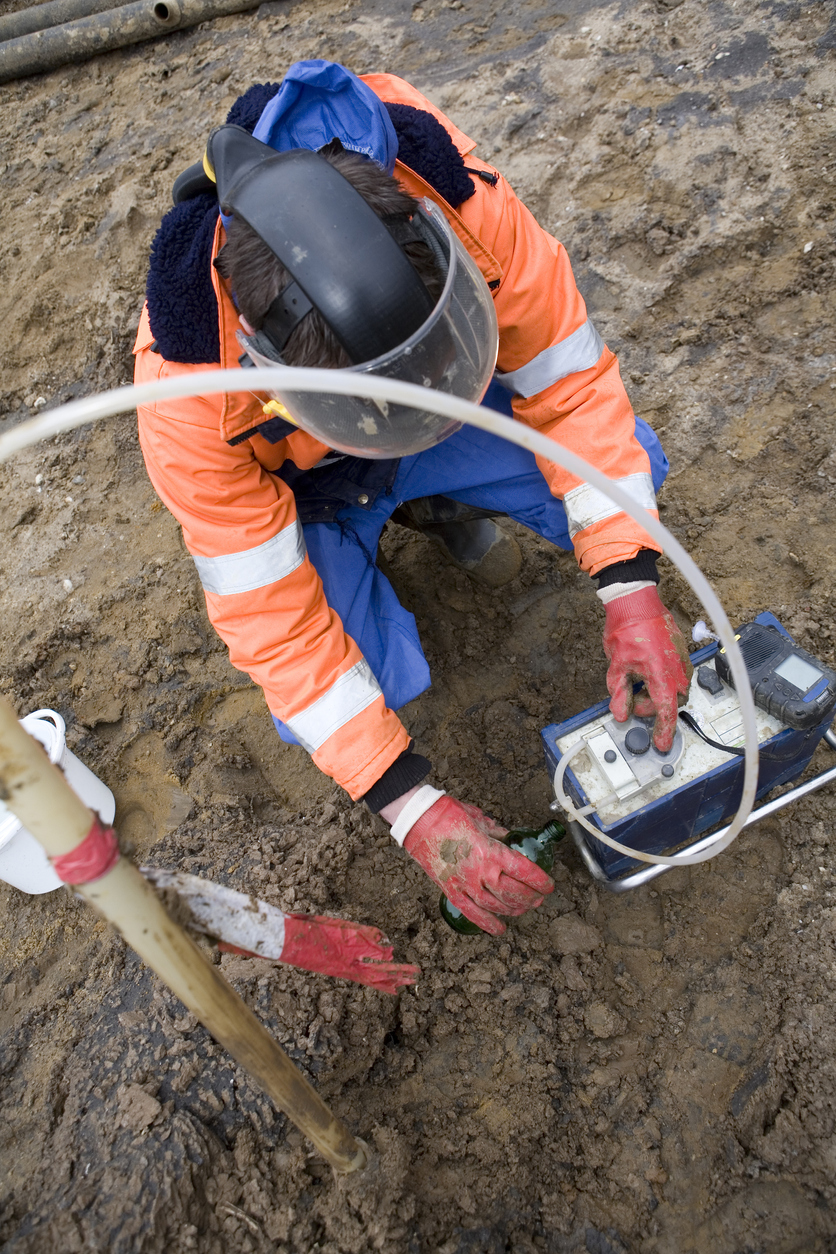
Average Cost of Soil Testing, Labour + Materials
Estimated cost of Soil Testing, including labour and materials.
This price type is not available in the local price file for this location yet.
Average Cost of Soil Testing, Labour Only
Estimated labour cost of Soil Testing, excluding materials.
This price type is not available in the local price file for this location yet.
Nigeria-wide figures use the local General / Nigeria record, or typical values from available state records. Final quotations depend on scope, specification and site condition.
Open full calculator1. Cost of soil testing in Nigeria 2026
Soil testing, more properly called geotechnical investigation is the cheapest way to avoid the most expensive mistake in construction. A borehole, a few laboratory tests, and an engineer's interpretation tell you how deep the competent stratum is, what loads it can carry, and what foundation your building actually needs. Without that information, every foundation design is a guess, and guesses on poor ground fail.
This guide explains what soil testing costs in Nigeria, how it is measured, and how to make sure you are paying for the tests that matter for your project.
2. How soil testing is measured
Soil testing is measured by borehole and by test. A typical residential investigation is one to three boreholes, each 10–30 m deep, with disturbed and undisturbed samples taken at intervals and sent to a laboratory for classification, strength, and consolidation tests. A borehole is priced per metre of depth or as a lump sum; laboratory tests are priced per sample. Always confirm how many boreholes, what depth, and which laboratory tests are included, those three facts decide the real cost.
3. Quick answer - soil testing prices in Nigeria 2026
| Pricing basis | Low | Average | High |
|---|---|---|---|
| Labour and materials, per borehole (to 15 m) | ₦XYZ | ₦XYZ | ₦XYZ |
| Labour only, per borehole | ₦XYZ | ₦XYZ | ₦XYZ |
| Laboratory tests, per sample | ₦XYZ | ₦XYZ | ₦XYZ |
Total = (boreholes × borehole rate) + (samples × test rate) + report and interpretation.
4. What low, average and high mean
Low is one shallow borehole (10–15 m) with basic classification tests, suitable for a bungalow on straightforward ground.
Average is two or three boreholes to 15–20 m with a standard suite of strength and consolidation tests and an engineer's report.
High is deep boreholes (25 m+), multiple locations, undisturbed sampling, and specialist tests such as consolidation, permeability, or chemical analysis.
5. Factors that change the price of soil testing
- Number of boreholes - One borehole describes one point. Larger or more variable sites need more.
- Borehole depth - Deeper boreholes take longer and need more sampling.
- Ground conditions - Boulders, hard strata, or high water tables slow drilling and add cost.
- Sampling type - Disturbed samples are cheap; undisturbed samples for strength and consolidation testing cost more.
- Laboratory suite - Classification, strength, consolidation, permeability, and chemical tests each have a separate price.
- Reporting and interpretation - A geotechnical engineer's report and foundation recommendation are part of the value, not an optional extra.
6. Cost breakdown - what you are paying for
- Mobilisation of drilling rig (10–20%).
- Drilling and sampling (30–40%).
- Laboratory testing (25–35%).
- Reporting and engineering interpretation (10–15%).
7. What a soil testing quote should include
- Number and location of boreholes
- Depth of each borehole
- Sampling method and intervals
- Laboratory test schedule
- Geotechnical report and foundation recommendation
- Mobilisation and access requirements
- Turnaround time
8. What can go wrong with soil testing
- Testing the wrong spot - A borehole in the corner of a plot may miss a soft pocket under the building. Locations should follow the proposed structure.
- Too few boreholes - One borehole on a large or variable site gives a false picture of uniformity.
- Skipping laboratory tests - A borehole log alone does not give the strength values needed for design.
- No interpretation - Raw data without an engineer's recommendation is easy to misread.
9. Red flags to watch for
- A fixed price with no stated depth or number of boreholes. You cannot tell what you are buying.
- No laboratory test schedule. Drilling alone is not testing.
- No engineer's report. The interpretation is the point.
- Pressure to skip investigation to "save time". It saves time now and costs far more later.
10. Questions to ask a soil testing contractor
- How many boreholes, at what locations, and to what depth?
- What sampling method and intervals will you use?
- Which laboratory tests are included?
- Will I get a geotechnical report with a foundation recommendation?
- How long will it take, and what access do you need?
11. How to compare two soil testing quotes
Compare on number of boreholes, depth, sampling method, laboratory test schedule, and whether an engineer's report is included. A cheap quote with one shallow borehole and no lab tests is not the same product as a proper investigation. The question to ask is not "which is cheaper" but "which gives the designer enough information to specify the foundation safely". If you are unsure what investigation your project needs, compare before you build and speak to the engineer designing the foundation.
12. Soil testing compared with other pre-construction investigations
| Investigation | Cost basis | Best for | Trade-off |
|---|---|---|---|
| Soil testing (boreholes) | Per borehole plus tests | Foundation design | Cost and time, but essential |
| Trial pits | Per pit | Shallow foundations, quick look | Limited depth, no strength data |
| Geophysical survey | Per survey line | Large sites, mapping strata | Needs borehole confirmation |
| Land surveying | Per plot or hectare | Setting out boundaries and levels | Different purpose entirely |
13. Common mistakes
- Skipping soil testing entirely - The most expensive saving in construction.
- Testing after the foundation is designed - The design should follow the test, not the other way round.
- Choosing the cheapest borehole - Depth and lab tests are what make the data useful.
- Ignoring the report - The recommendation section is the part you paid for.
14. Worked examples - tabulated
Example 1 - two boreholes to 15 m with basic lab tests (bungalow)
| Item | Calculation | Amount |
|---|---|---|
| Mobilisation of rig | Lump sum | ₦150,000 |
| Drilling and sampling | 2 boreholes × 15 m × ₦150,000/m | ₦300,000 |
| Laboratory tests (classification and strength) | 6 samples × ₦10,000/test | ₦60,000 |
| Geotechnical report | Lump sum | ₦50,000 |
| Total (labour and materials) | ₦560,000 | |
| Labour only | 2 boreholes × ₦150,000/borehole | ₦300,000 |
15. Planning example
A two-storey building on a 30 m × 20 m plot needs at least two boreholes to 20 m, one near each end of the proposed structure, with samples tested for classification and strength. That is 40 m of drilling plus around 8 samples. Multiply each by your rates, add mobilisation and the report, and you have the investigation budget. Use the materials estimator later when pricing the foundation the report recommends, so the two stages are budgeted together.
16. FAQs
How much does soil testing cost in Nigeria?
It depends on the number and depth of boreholes and the laboratory tests. This guide gives per-borehole and per-test rates you can use to build a budget.
Do I really need soil testing for a bungalow?
Strongly recommended, especially on filled or soft ground. It is a small cost against the risk of foundation failure.
How many boreholes do I need?
Commonly one to three for a residential building, depending on plot size, variability, and the engineer's advice.
How deep should boreholes go?
Deep enough to reach competent strata and to cover the zone affected by the foundation. Your engineer sets this.
Can I use a trial pit instead of boreholes?
A trial pit gives a quick shallow look but no strength data at depth. It is useful for simple shallow foundations, not for design of deep ones.
How long does soil testing take?
Typically 1–3 weeks including drilling, laboratory work, and reporting.
Related Skillland services and guides
Ready to book soil testing? Post your project with your plot size and proposed building, and compare geotechnical contractors who provide reports, not just logs.
Soil Testing costs by state and the FCT
Choose a state or the FCT to view the local soil testing page, pricing and project guidance.
South West
North Central
South South
South East
North West
North East
Ready to start your project?
Post your project on Skillland and connect with trusted artisans and contractors in Nigeria.
Post a Project