Cost Guide
Cost of bored piling in Nigeria 2026
Bored piling is the quiet, low-vibration method used on urban sites across Nigeria. This guide explains how it is priced per metre, what adds cost, and how to compare quotes with worked examples.
Average Cost of Bored Piling, Labour + Materials
Estimated cost of Bored Piling, including labour and materials.
Average Cost of Bored Piling, Labour Only
Estimated labour cost of Bored Piling, excluding materials.
Nigeria-wide figures use the local General / Nigeria record, or typical values from available state records. Final quotations depend on scope, specification and site condition.
Open full calculator1. Cost of bored piling in Nigeria 2026
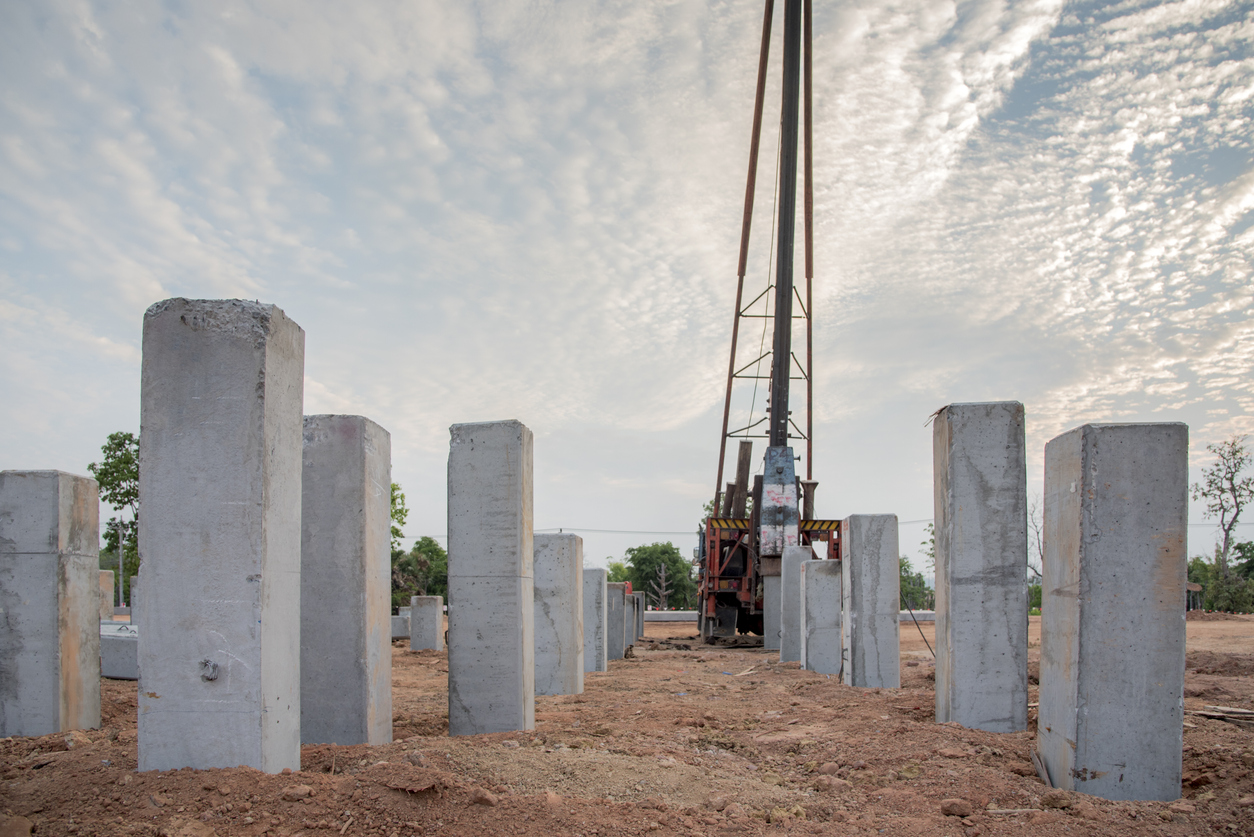
Bored piling is the method of choice when a site cannot tolerate the noise and vibration of driven piles, or when the ground is too stiff to drive through. A rotary rig drills a hole, a reinforcement cage is lowered, and concrete is placed, often under a tremie where water is present. It is slower than driving, but cleaner and more controllable, which is why it dominates urban construction in Lagos, Abuja, and Port Harcourt.
This guide explains what bored piling costs, what drives the per-metre rate, and how to read a quote. If you are comparing it with driven piles or a raft, it helps to compare before you build using the same depth and diameter assumptions.
2. Quick answer - bored piling prices in Nigeria 2026
| Pricing basis | Low | Average | High |
|---|---|---|---|
| Labour and materials, per linear metre | ₦90,000 | ₦160,000 | ₦260,000 |
| Labour only, per linear metre | ₦25,000 | ₦50,000 | ₦90,000 |
Total = per-metre rate × average depth × number of piles.
3. What low, average and high mean
Low is shallow (8–10 m), small diameter (300–400 mm), dry stable ground, good access, minimal casing.
Average is 12–18 m depth, 450–600 mm diameter, some casing, and a normal urban site with reasonable access.
High is deep (20 m+), large diameter (750 mm+), water-bearing ground requiring full casing and tremie concrete, or restricted access.
4. Factors that change the price of bored piling
- Diameter and depth. The two core variables. Concrete and reinforcement scale with both.
- Ground stability. Stable clay drills cleanly. Running sand and high water tables require casing and careful concrete placement.
- Casing. Temporary casing keeps the hole open. The depth of casing needed is a direct cost.
- Concrete method. Tremie placement under water is slower and more expensive than free-fall dry placement.
- Reinforcement cage. Design, steel grade, and laps.
- Rig type and access. A standard rotary rig needs a firm platform and access. Restricted sites may need a smaller, slower rig.
- Spoil removal. Drilled material must be removed and disposed of. On tight urban sites this can add cost.
5. Cost breakdown - what you are paying for
- Rig mobilisation and setup (5–12%).
- Drilling (25–35%). The dominant labour cost.
- Casing (10–18%). Depth-dependent.
- Reinforcement cage (12–18%).
- Concrete (15–22%). Tremie work at the high end.
- Spoil removal and site management (3–8%).
- Testing and supervision (3–8%).
6. What a bored piling quote should include
- Pile diameter, depth, and count
- Casing depth and type
- Concrete grade and placement method
- Reinforcement details
- Spoil removal and disposal
- Testing regime
- Mobilisation and access assumptions
7. Red flags to watch for
- No casing allowance in soft ground - The hole will collapse.
- Concrete placement method not stated - Tremie versus dry placement changes quality and price.
- Spoil removal excluded - It has to go somewhere.
- No testing - Bored piles can have defects that are invisible from above.
- Rig access not discussed - A rig that cannot reach the position cannot drill it.
8. Questions to ask a bored piling contractor
- What casing depth are you pricing, and why?
- How will you place concrete, and is it tremie or dry?
- Is spoil removal included?
- What testing do you recommend?
- Can you show a completed bored pile job with records?
9. Bored piling compared with driven piling
| Option | Cost basis | Best for | Trade-off |
|---|---|---|---|
| Bored piling | Per linear metre | Urban sites, vibration-sensitive | Slower, casing cost |
| Driven piling | Per linear metre | Firm ground, speed | Noise, vibration |
| Sheet piling | Per m² of wall | Excavation support | Not a load-bearing foundation |
| Micropiling | Per metre | Restricted access, underpinning | Higher unit cost |
10. Common mistakes
- Choosing bored piling without checking ground - In some ground, driven is faster and cheaper.
- Underestimating casing - Soft ground needs more casing than expected.
- Ignoring spoil - Removal and disposal add cost and time.
- Skipping integrity testing - Defects in bored piles are common enough that testing is standard practice.
Planning example
A city-centre site with 14 piles at 16 m average gives 224 linear metres. Multiply by your per-metre rate, add casing for the top 7 m of each pile (98 m), add reinforcement and concrete at 224 m each, add spoil removal, then mobilisation and testing. Use the materials estimator to check the concrete volume for the diameter you have chosen, because casing and spoil are the two lines most often missing from cheap quotes.
11. FAQs
Why choose bored piling over driven piling?
Less noise and vibration, better for urban sites and nearby structures, and able to penetrate ground that cannot be driven through.
How long does bored piling take?
A 14-pile layout at 16 m depth typically takes 1–2 weeks, depending on ground and rig.
Can bored piles be installed next to existing buildings?
Yes, with care. Bored piling is generally the preferred method near sensitive structures.
What is tremie concrete?
Concrete placed through a pipe under water to avoid segregation. Used where the hole fills with water.
How is bored piling measured for payment?
Usually per linear metre of completed pile, agreed in writing before work starts.
Do bored piles need casing?
Only where the ground is unstable or water-bearing. Stable ground may need little or none.
Related Skillland services and guides
- Post a project
- Get a quote
- Top-rated skillmen
- Compare before you build
- Materials estimator
- Locations
- Magazine
- Track request
- Trust and safety
Ready to price bored piling? Post your project with your pile layout and ground conditions, and compare contractors with tested bore records.
Bored Piling costs by state and the FCT
Choose a state or the FCT to view the local bored piling page, pricing and project guidance.
South West
North Central
South South
South East
North West
North East
Ready to start your project?
Post your project on Skillland and connect with trusted artisans and contractors in Nigeria.
Post a Project